.
2022 | Stock Trading Installation
Can the frenzy for financial profits be turned into an obsession for environmental concern?
Natural resources are currently not considered in the price calculation of goods and services. Polluting emissions and extractive practices have barely any financial consequences on companies, yet the ecological costs are felt by local communities, often in the Global South. Clearly natural systems and their ‘resources’ have a value. But what value does it have on the stock market?
For The Environmentalist Stock Exchange (short ESX), we, Cream on Chrome, took inspiration from ecological economics to integrate the logic of ecosystems into the calculation of the ‘true ecological value’ of a stock market asset and visualize this idea in an interactive installation. In conversation with ecologists and environmental economists, crucial data on the state of the biosphere was incorporated into the installation.
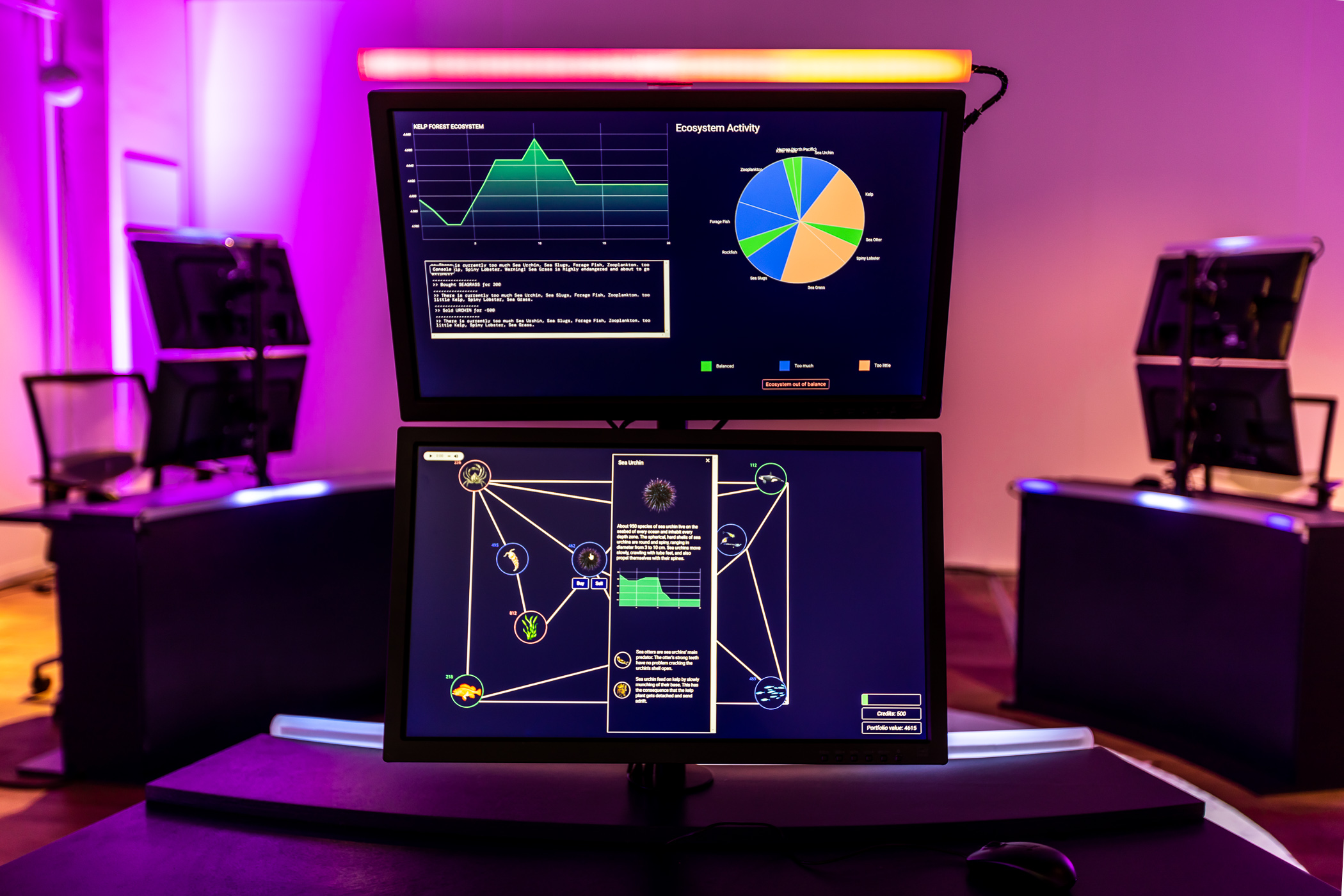
“What if global markets were modeled after the principles of ecology?”
Instead of answering this question, the interactive installation consigns it to the public. By using the language of stock markets it initiates among visitors a conversation about value systems. With the use of an accessible, almost addictive game format, the project engages individuals 1) to learn about the way species are connected to each other in ecosystems and 2) to take part in the performance of trading and ‘messing’ with ecosystems to find out more about their roles as humans and individuals.
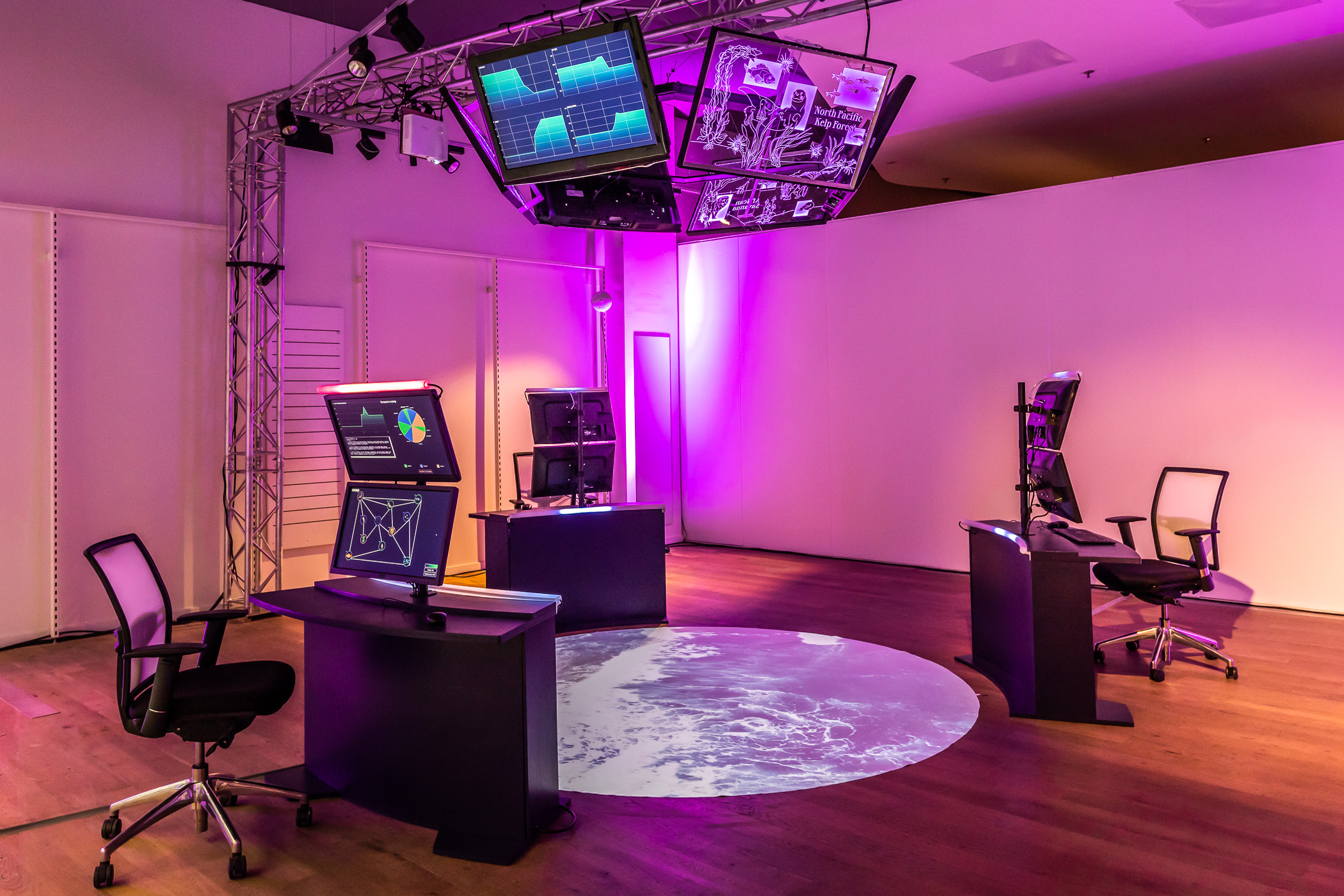
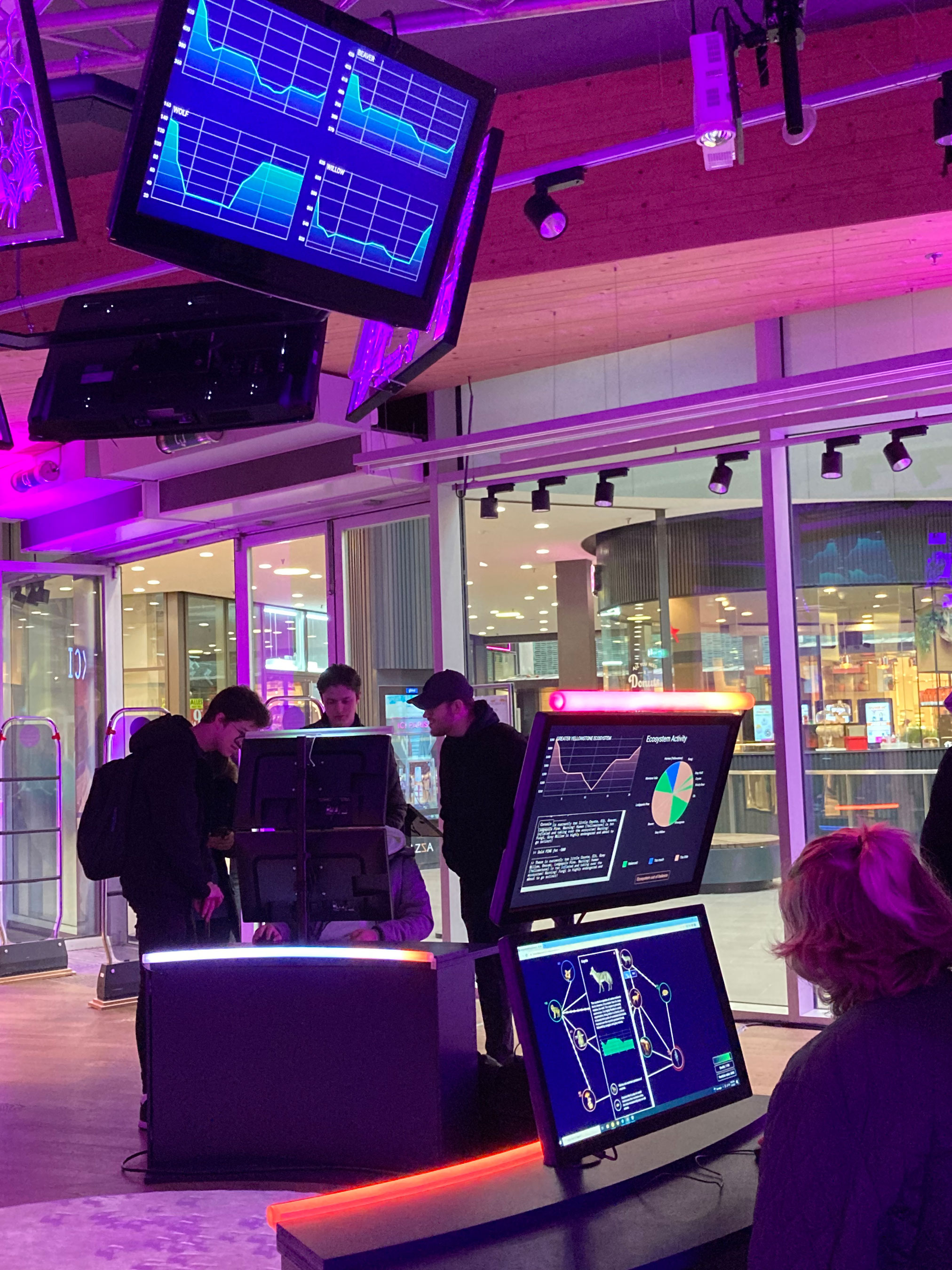
In its spatial design, ESX fuses a dynamic arcade (with guiding, animated light bars) with the seriousness of a stock exchange (with its monitor circles hovering on top displaying raw information and switching numbers from all around the world). The exhibition design is complemented with neonglow illustrations of each of the three ecosystems that can be played (savanna, pacific ocean, greater yellowstone). A circular projection in the centre shows moving landscapes from an aloof view, depicting the three ecosystems as animate assets, aerial shots of eco-data.
In this alternative stock market, visitors invest in species instead of in companies. Each of these actions feeds into the simulation, causing the chosen species to thrive. Graphs and line charts are giving hints in real time about investment opportunities – of stocks that may be undervalued or overvalued. Which species or geographic regions need a financial boost? Investors also receive profit distributions: the better an ecosystem performs, the higher the profit. This exchange (or entanglement) makes investors literally “invested” in the well-being of sea otters, fungi and kelp forests.
On the interface, players can open the info box of each species and read up on its relation to others in order to inform their trading strategy and next moves. The visual design indicates the complex ways in which each investment affects another species (a ‘ripple effect’) through animated dashed lines emitting from the bought/sold species to its nearest neighbors. By using color codes and animations, ESX’s information design offers a more intuitive understanding of the internal logics and ecological connections in the game instead of bombarding players with too much detail on the surface layer.
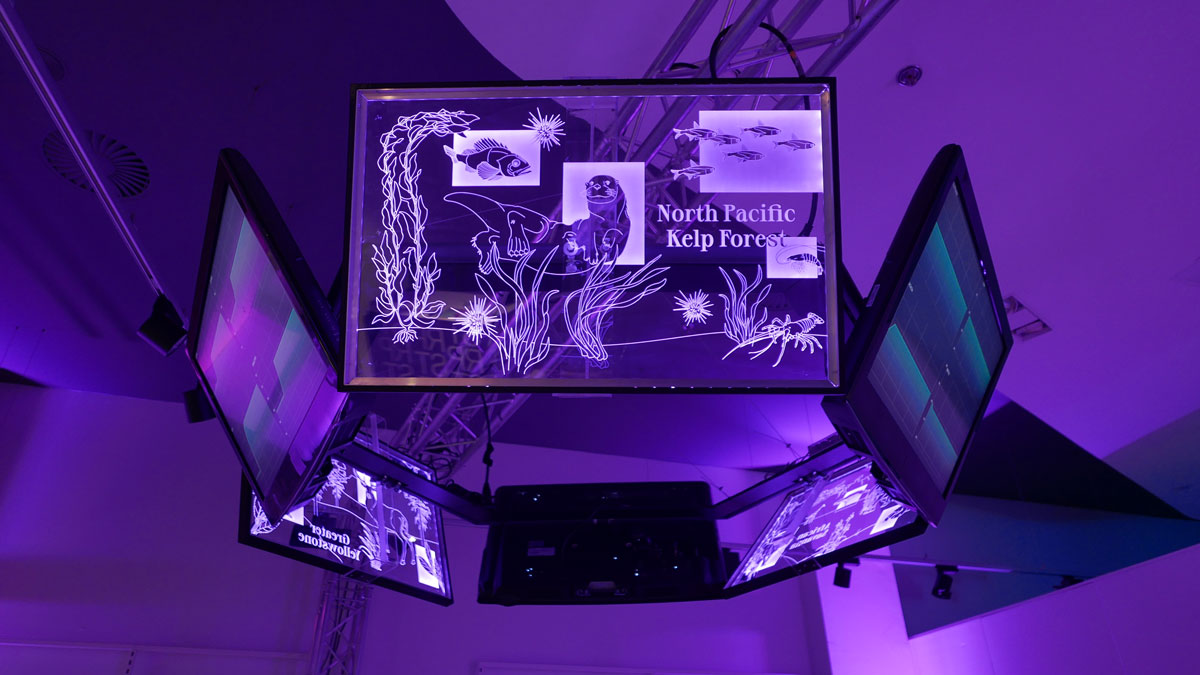
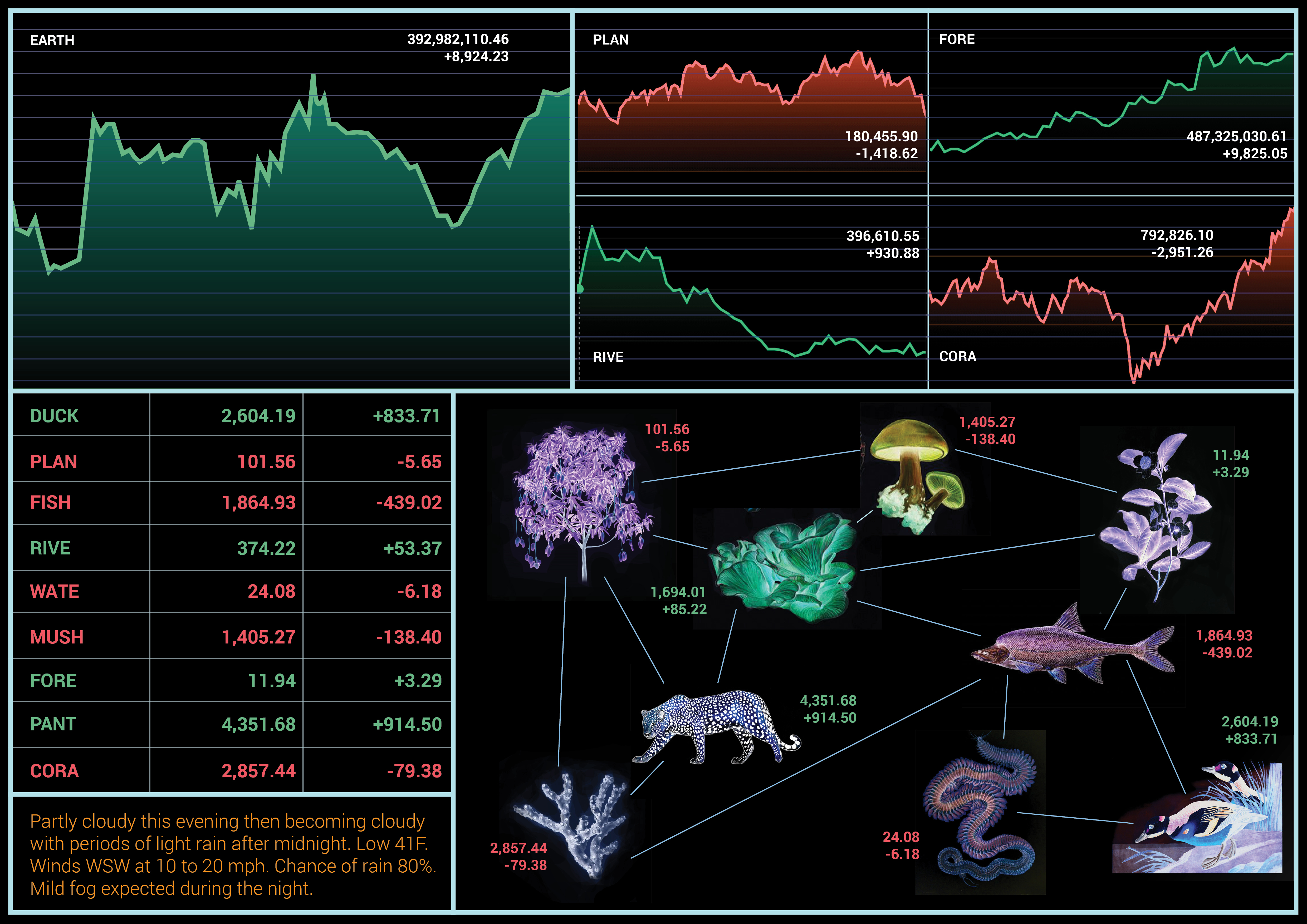
ESX creates a unique fusion of fields: Taking the principles of market economy and putting them in the framework of ecology allows for interesting comparisons. Where does this juxtaposition cause friction? Can ecosystems and markets ever be reconciled? ESX’s main take home message is that all is inevitably connected and that no economic model can be complete without taking the cost of nature into account.
During the 4 days of the STRP Festival in Eindhoven, 8000 people came to visit, among which 2500 students and children. Without any explanation they could dive into the game by clicking and reading up on the different species. By learning how two species relate to each other they could swiftly adjust their investments and sometimes succeed in balancing an ecosystem. From young to old, visitors stay with the installation for an average of 5-10 minutes, getting fully absorbed in the experience.
The Environmentalist Stock Exchange was commissioned as part of ACT (Award for Creative Technology) by STRP Festival. Developer: Jonas Ersland. Supporting interns: Polina Slavova, Lindsey Bundel. Photos by Hanneke Wetzer (1,2) and Cream on Chrome (3,4,5)
Leave a Reply